


Managing diabetes in Pakistan can be challenging because our traditional foods often include roti, rice, and sweets. However, with smart food choices and portion control, diabetic patients can enjoy desi meals while keeping blood sugar levels stable. A balanced diet combined with regular monitoring plays a crucial role in long-term diabetes control.
Why Diet Matters in Diabetes?
Food directly affects blood glucose levels. High-carb and sugary foods cause sudden spikes, while fiber-rich and protein-based meals help maintain steady sugar levels. Choosing low glycemic index (GI) foods, avoiding deep-fried items, and eating smaller portions can significantly reduce complications such as heart disease, kidney damage, and nerve problems.
Best Pakistani Foods for Diabetic Patients
| Food Item | Why It Is Good |
|---|---|
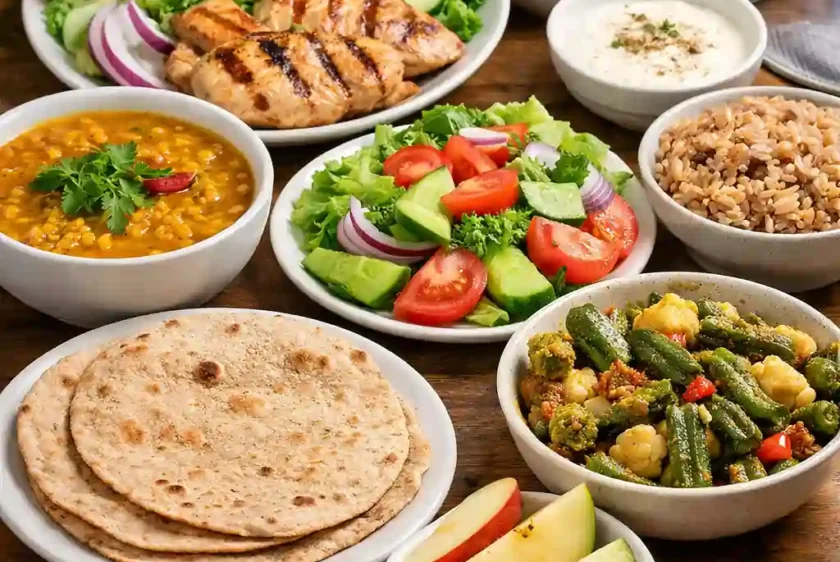
| Whole Wheat Roti | High in fiber, digests slowly, prevents sugar spikes |
| Brown Rice (Small Portion) | Better than white rice, lower glycemic impact |
| Daal (Masoor, Moong, Chana) | Rich in protein and fiber |
| Sabzi (Karela, Bhindi, Tinda, Lauki) | Low calories, high nutrients |
| Grilled Chicken/Fish | Lean protein, keeps you full longer |
| Guava & Apple | Low glycemic fruits in moderate amounts |
Simple Desi Daily Diet Plan
Here is an easy and practical meal plan suitable for Pakistani households:
| Meal Time | Recommended Option |
|---|---|
| Breakfast | 1 boiled egg + 1 whole wheat roti + sugar-free tea |
| Mid-Morning | Handful of almonds or walnuts |
| Lunch | 1 roti + daal or grilled chicken + mixed sabzi + salad |
| Evening Snack | 1 apple or guava |
| Dinner | Light portion of sabzi + grilled fish/chicken |
Foods to Avoid
- White naan and paratha
- Sugary drinks and packaged juices
- Mithai and desserts
- Deep fried snacks (samosa, pakora)
- Large portions of white rice
Final Thoughts
Diabetes management does not mean giving up desi food completely. The key is balance, portion control, and healthier cooking methods such as grilling, baking, or boiling instead of frying. Regular blood sugar testing, healthy eating, and physical activity together create a strong foundation for diabetes control. Always consult your doctor or healthcare provider before making major dietary changes.