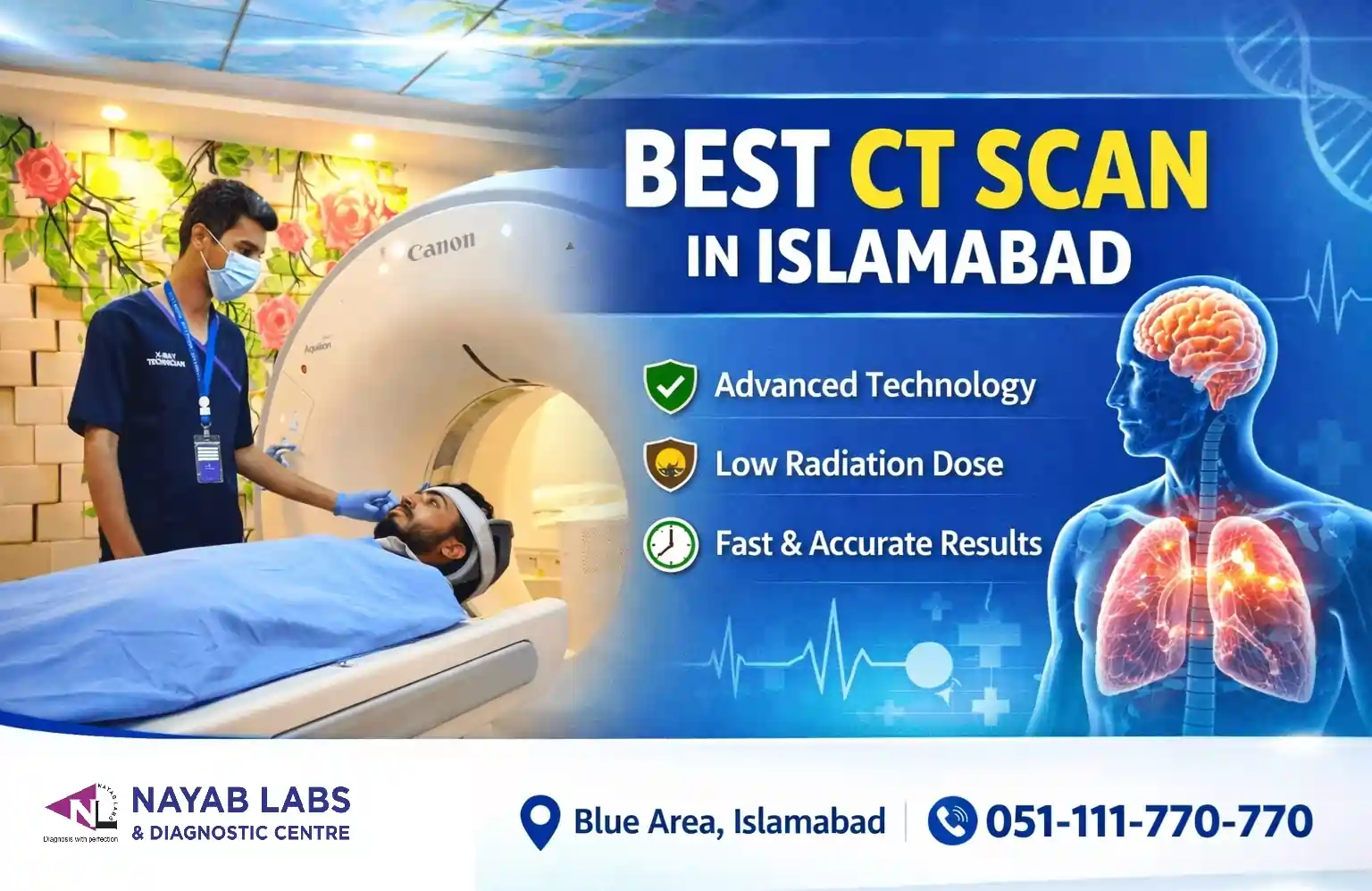


When a doctor recommends a CT scan, many patients immediately worry:
Is a CT scan safe? Does it cause cancer? Is the radiation dangerous?
These concerns are common but not always accurate. In this article, we separate myths from medical facts and explain the real safety profile of a CT scan.
What Is a CT Scan?
A CT scan (Computed Tomography scan) is an advanced imaging test that uses X-rays and computer technology to create detailed cross-sectional images of the body.
Unlike a regular X-ray, a CT scan provides:
- Clear images of organs
- Detection of internal bleeding
- Tumor identification
- Stroke and trauma evaluation
Because of its accuracy, CT scanning is widely used in emergency and diagnostic medicine.
Myth vs Fact: Is a CT Scan Dangerous?
❌ Myth 1: CT Scans Always Cause Cancer
✔ Fact: CT scans use controlled, low doses of radiation. While radiation exposure carries a small theoretical risk, a single medically necessary CT scan has a very low chance of causing harm. Doctors only recommend it when the benefit outweighs the risk.
❌ Myth 2: Radiation Is Extremely High
✔ Fact: A CT scan uses more radiation than a regular X-ray, but modern machines use dose-reduction technology to keep exposure as low as reasonably achievable (ALARA principle).
For comparison, we are naturally exposed to background radiation every day from the environment.
❌ Myth 3: You Should Avoid Completely
✔ Fact: Avoiding a necessary CT scan can delay diagnosis of serious conditions like:
- Stroke
- Internal bleeding
- Cancer
- Lung infections
- Head injury
In many emergencies, a CT scan can be life-saving.
How Much Radiation Is in a CT Scan?
Radiation dose depends on the type of CT scan:
- Head CT scan → Lower radiation dose
- Chest or abdominal CT scan → Slightly higher dose
However, imaging centers follow strict safety guidelines. Technologists adjust the dose based on:
- Patient age
- Body size
- Area being scanned
Children receive specially adjusted low-dose protocols.
Is it Safe for Children and Pregnant Women?
Children
CT scans are safe when medically necessary. Pediatric protocols reduce radiation exposure significantly.
Pregnancy
Doctors avoid CT scans during pregnancy unless absolutely necessary. If required, protective measures are used to minimize fetal exposure.
Always inform your doctor if you are pregnant before undergoing a CT scan.
What Are the Possible Side Effects?
Most CT scans have no side effects.
If contrast dye is used, some people may experience:
- Mild nausea
- Warm sensation
- Rare allergic reactions
Serious reactions are uncommon and medical staff are trained to manage them immediately.
Benefits
The advantages of CT scanning often outweigh potential risks. It helps in:
- Early cancer detection
- Diagnosing stroke within minutes
- Detecting fractures not visible on X-ray
- Identifying infections
- Evaluating internal injuries after accidents
Accurate diagnosis leads to faster treatment and better outcomes.
Final Verdict: Is a CT Scan Safe?
Yes! a CT scan is generally safe when performed under medical supervision.
Modern CT machines use advanced technology to minimize radiation exposure. Doctors recommend a CT scan only when the diagnostic benefit is greater than the potential risk.
If your physician advises a CT scan, it is usually because it is the fastest and most accurate way to diagnose your condition.
Quick Answers
Does a hurt?
No, it is painless and non-invasive.
How long does a CT scan take?
Usually 5 to 15 minutes.
Can a CT scan cause cancer?
The risk from a single scan is extremely low.
Is CT scan safer than MRI?
Both are safe. The choice depends on the medical condition.