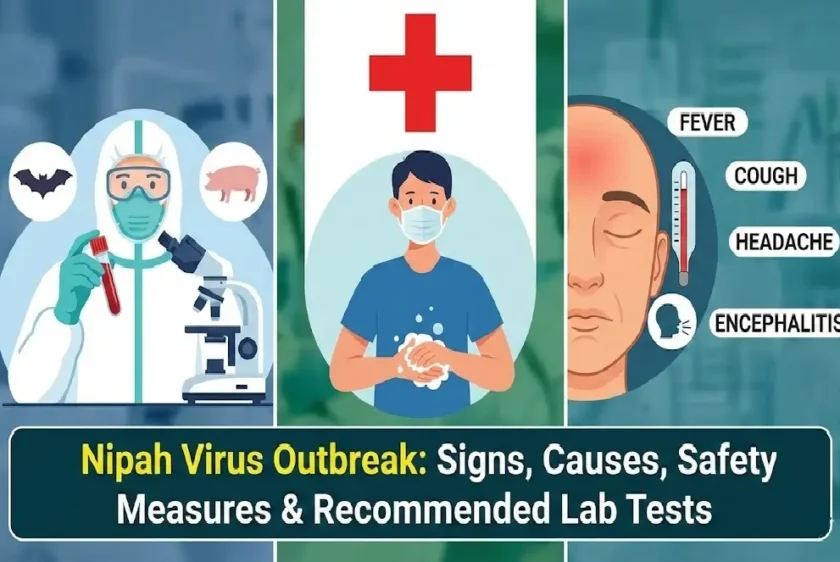
The Nipah Virus (NiV) is a rare but deadly virus that has caused outbreaks in South and Southeast Asia. Due to its high mortality rate and potential for human-to-human transmission, early detection, awareness of symptoms, and preventive measures are crucial.
This guide will cover:
- Signs and symptoms
- Causes and transmission routes
- Safety measures to prevent infection
- Recommended lab tests for diagnosis
By the end, you’ll have a complete understanding of how to recognize, prevent, and test for Nipah Virus, ensuring your safety and that of your loved ones.
What is Nipah Virus?
Nipah Virus is a zoonotic virus, meaning it can spread from animals to humans. It was first identified in Malaysia in 1998 and has since caused outbreaks in countries like India, Pakistan and Bangladesh.
Key facts:
- Mortality Rate: 40–75%
- Primary Carriers: Fruit bats (Pteropus species)
- Human-to-Human Transmission: Possible through close contact
Signs & Symptoms of Nipah Virus
Early detection is crucial. Symptoms usually appear 5–14 days after exposure.
Common Symptoms:
- Fever and headache
- Fatigue and muscle pain
- Sore throat and cough
- Vomiting and nausea
Severe Symptoms:
- Encephalitis (inflammation of the brain)
- Confusion and disorientation
- Seizures
- Coma in extreme cases
Tip: If you experience sudden high fever, neurological symptoms, or have been in contact with someone infected, seek medical attention immediately.
Causes & Transmission of Nipah Virus
Understanding how spreads is key to prevention.
Animal-to-Human Transmission:
- Direct contact with infected fruit bats or their secretions
- Consumption of raw date palm sap contaminated by bats
- Contact with infected pigs
Human-to-Human Transmission:
- Close contact with infected individuals
- Exposure to body fluids like saliva, urine, or blood
- Contaminated surfaces or medical equipment
Fact: Nipah Virus is not airborne, but direct contact increases risk.
Safety Measures & Prevention
Preventing requires awareness and simple precautions:
- Avoid contact with bats or sick animals
- Do not consume raw date palm sap
- Practice hand hygiene — wash hands regularly
- Use masks when caring for infected patients
- Disinfect surfaces and avoid sharing personal items
- Seek early medical attention if symptoms appear
Safety starts at home. Communities should be educated about the risks and preventive strategies.
Recommended Lab Tests
Early detection is vital due to the virus’s high mortality rate. Nayab Labs & Diagnostic Centre offers state-of-the-art testing for viral infections, including Nipah screening.
Key Lab Tests:
RT-PCR (Reverse Transcriptase Polymerase Chain Reaction)
- Detects viral RNA from blood, urine, or throat swabs
- Most reliable and widely used
Serology Tests (IgM/IgG antibodies)
- Identify past or current infection
- Useful for contact tracing and outbreak management
Other supportive tests:
- CBC (Complete Blood Count) to detect infection
- Liver & kidney function tests for complications
Tip: Always consult a certified lab like Nayab Labs for accurate testing. Early detection can save lives.
FAQs About Nipah Virus
Q1: How deadly is Nipah Virus?
A: Nipah Virus has a mortality rate of 40–75%, depending on outbreak and healthcare quality.
Q2: Can Nipah Virus spread through air?
A: No, it primarily spreads through direct contact with infected fluids or animals.
Q3: What are the first signs of Nipah Virus?
A: Early signs include fever, headache, sore throat, fatigue, and vomiting. Severe cases involve neurological symptoms.
Q4: How is Nipah Virus diagnosed?
A: Through RT-PCR tests, antibody (IgM/IgG) tests, and supportive blood work.
Q5: How to prevent Nipah Virus infection?
A: Avoid contact with bats and sick animals, do not consume raw date palm sap, practice hygiene, and seek medical help immediately if symptoms appear.
Conclusion
The Nipah Virus outbreak is serious but preventable. Awareness of signs, causes, and safety measures, along with prompt testing at certified labs, can protect you and your community.
Stay informed, practice preventive measures, and consult Nayab Labs & Diagnostic Centre for reliable testing.