

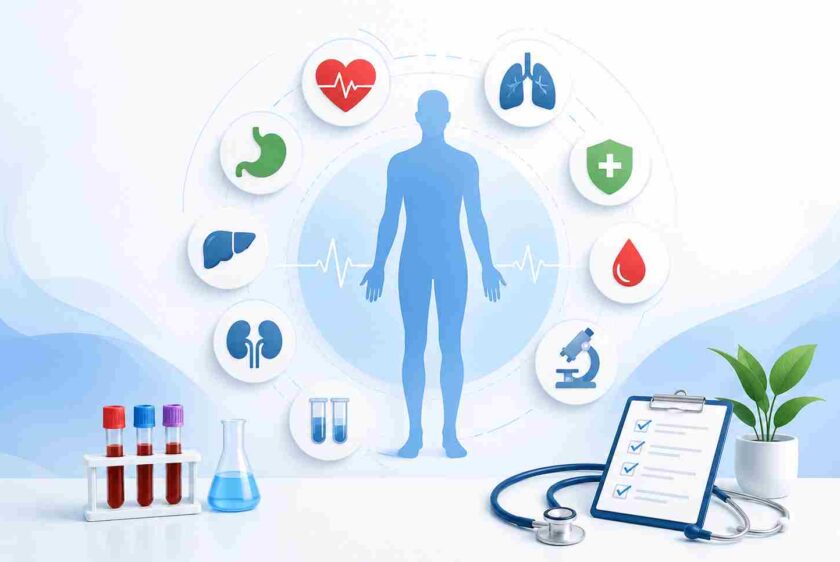
A full body test is a simple way to get an overall picture of your health. Many health conditions can develop without obvious symptoms, which is why regular health screening can be useful even when you feel healthy.
A complete health checkup may include blood tests, urine tests, imaging, and basic heart screening. The tests you need can depend on your age, lifestyle, family history, and health condition.
In this guide, we discuss the important tests commonly included in a full body checkup and why they may be recommended.
What Is a Full Body Test?
A full body test, also called a complete health checkup, is a group of medical tests designed to assess different areas of your health.
Depending on the package, it may check:
- Liver function
- Kidney function
- Thyroid health
- Blood sugar
- Cholesterol
- Blood cells
- Electrolyte balance
- Urinary health
- Hepatitis B and C
- Heart health
- Abdominal and pelvic organs
- Chest and lungs
A full body test does not test for every possible disease. Instead, it provides useful information about important aspects of your general health.
Why Should You Get a Full Body Checkup?
Some health problems may not cause noticeable symptoms in their early stages. Regular screening can help identify abnormal results that may require further evaluation.
A health checkup can be particularly useful if you have a family history of diabetes, heart disease, kidney problems, or other chronic conditions.
It can also be helpful for people with risk factors such as:
- High blood pressure
- High cholesterol
- Over-weight or obesity
- Smoking
- Sedentary lifestyle
- Poor diet
- Family history of disease
However, not every person needs every test every year. Your doctor can recommend a screening schedule based on your individual health needs.
Full Body Test List
A comprehensive health screening package may include the following tests.
1. LFTs – Liver Function Tests
Liver Function Tests (LFTs) assess different markers related to liver health. They can help identify abnormalities that may require further medical evaluation.
2. RFTs – Kidney Function Tests
Renal Function Tests (RFTs) are used to assess kidney function. They can provide important information about how effectively the kidneys are working.
Kidney screening may be especially important for people with diabetes, high blood pressure, or a family history of kidney disease.
3. TFTs – Thyroid Function Tests
Thyroid Function Tests (TFTs) help assess thyroid function. Thyroid problems can be associated with symptoms such as tiredness, unexplained weight changes, and changes in heart rate or mood.
4. Lipid Profile
A lipid profile measures cholesterol and other blood fats. It commonly includes total cholesterol, LDL, HDL, and triglycerides.
These results can help assess cardiovascular risk.
5. Fasting Blood Sugar
Fasting blood sugar measures glucose levels after fasting. It is commonly used for diabetes screening and monitoring.
6. HbA1c
HbA1c provides an estimate of average blood sugar levels over the previous two to three months. It is commonly used for diabetes screening and monitoring.
7. Electrolytes
Electrolytes such as sodium and potassium are important for fluid balance, muscles, nerves, and other body functions.
Electrolyte testing can help identify abnormal levels that may require further assessment.
8. CP with ESR
CP (Complete Blood Picture) provides information about red blood cells, white blood cells, hemoglobin, and platelets.
ESR (Erythrocyte Sedimentation Rate) is a general marker that can be associated with inflammation.
9. Urine R/E
Urine Routine Examination (Urine R/E) examines a urine sample and can provide information related to the urinary system and certain other health conditions.
10. HBsAg and HCV
HBsAg is used for hepatitis B screening, while HCV testing is used for hepatitis C screening.
Hepatitis infections may sometimes have few or no noticeable symptoms, making appropriate screening important for people with relevant risk factors.
11. Ultrasound Abdomen & Pelvis
An ultrasound of the abdomen and pelvis uses sound waves to create images of internal organs.
It may provide information about organs such as the liver, gallbladder, kidneys, spleen, urinary bladder, and other abdominal or pelvic structures.
12. X-Ray Chest
A chest X-ray provides an image of the chest and can help evaluate the lungs and other structures.
It should not automatically be considered an annual test for every healthy person. A healthcare professional can determine whether it is appropriate.
13. ECG
An ECG (Electrocardiogram) records the electrical activity of the heart. It can help identify certain heart rhythm abnormalities and other cardiac findings.
Full Body Checkup Package – Rs. 19,500
For people looking for a convenient complete health checkup package, our package includes important laboratory and diagnostic tests in one screening plan.
Package Includes:
- LFTs
- RFTs
- TFTs
- Lipid Profile
- Fasting Blood Sugar
- Electrolytes
- CP with ESR
- Urine R/E
- HBsAg
- HCV
- HbA1c
- Ultrasound Abdomen & Pelvis
- X-Ray Chest
- ECG
This package can be a convenient option for individuals who want to get several important health assessments done together.
Who Should Consider a Full Body Test?
A full body health checkup may be useful for adults who want to monitor their general health or have specific risk factors.
You should discuss your screening needs with a healthcare professional if you:
- Have a family history of chronic diseases
- Have diabetes risk factors
- Have high blood pressure or cholesterol
- Are over-weight
- Smoke or use tobacco
- Have a sedentary lifestyle
- Take long-term medication
- Have previous abnormal test results
How Often Should You Get a Full Body Test?
There is no single testing schedule that is suitable for everyone.
Some tests may be recommended annually, while others may be needed less frequently depending on your age, risk factors, symptoms, and previous results.
Instead of doing every available test every year, it is better to follow a screening plan recommended by a qualified healthcare professional.
Frequently Asked Questions
What is included in a full body test?
A full body test may include blood tests, urine testing, imaging, and heart screening. The exact tests depend on the health checkup package.
Which blood tests should I get every year?
There is no universal list for everyone. Depending on your health and risk factors, your doctor may recommend blood sugar, HbA1c, lipid profile, CBC, liver, kidney, or thyroid tests.
Is a full body checkup necessary every year?
Not necessarily. The frequency of health screening depends on your age, medical history, family history, lifestyle, and risk factors.
How much does a full body checkup cost?
The price depends on the tests included. Our comprehensive package includes the tests listed above for Rs. 19,500.
Take a Step Toward Better Health
A regular full body test can help you understand important aspects of your health and identify abnormal results that may need further evaluation.
If you are planning a complete health checkup, choose tests according to your individual health needs and consult a qualified healthcare professional for appropriate screening recommendations.