
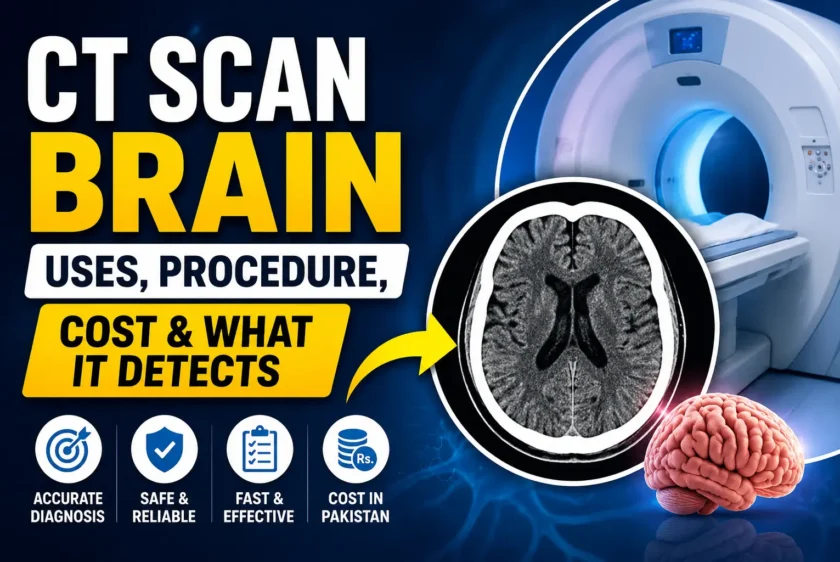
A CT scan of the brain, also called a brain CT scan or head CT, is a fast and commonly used imaging test that creates detailed cross-sectional images of the brain and skull. Doctors may recommend a brain CT scan when they need to quickly evaluate symptoms such as a severe headache, head injury, sudden confusion, weakness, or suspected bleeding in the brain.
Unlike a standard X-ray, a CT scan produces multiple detailed images that can be viewed as slices, helping doctors assess the brain, skull, and surrounding structures.
What Is a CT Scan Brain?
A brain CT scan uses X-rays and computer technology to create detailed images of the head. Depending on the reason for the examination, the scan may be performed with or without contrast dye.
A non-contrast brain CT is commonly used in emergency situations because it can quickly identify conditions such as bleeding or skull fractures. Contrast-enhanced CT may be recommended in certain cases to provide additional information about blood vessels, abnormal growths, or other structures.
Why Is a CT Scan of the Brain Done?
Doctors may recommend a brain CT scan for several reasons, including:
- Head injuries and suspected skull fractures
- Sudden or severe headaches
- Suspected bleeding in the brain
- Symptoms of stroke
- Loss of consciousness
- Seizures
- Unexplained confusion or changes in mental status
- Dizziness or certain neurological symptoms
- Suspected brain tumors or other abnormalities
- Hydrocephalus or abnormal accumulation of fluid
- Monitoring certain known brain conditions
The appropriate imaging test depends on the patient’s symptoms and clinical history. A doctor may recommend an MRI instead of, or in addition to, a CT scan when more detailed soft-tissue imaging is required.
What Does a Brain CT Scan Detect?
A CT scan can provide important information about several conditions affecting the brain and skull.
1. Brain Bleeding
CT is particularly useful for detecting acute bleeding inside or around the brain, especially in emergency situations.
2. Stroke
A brain CT may help doctors evaluate a patient with suspected stroke. It can help identify bleeding and may also help rule out other causes of neurological symptoms. Additional imaging, such as CT angiography or CT perfusion, may be recommended in selected cases.
3. Head Injuries
After a significant head injury, CT can help detect skull fractures, bleeding, swelling, and other traumatic abnormalities.
4. Brain Tumors and Masses
CT can sometimes identify masses or structural abnormalities in the brain. MRI is often preferred when more detailed characterization of a suspected brain tumor is needed.
5. Hydrocephalus
CT can show enlargement of the brain’s fluid-filled spaces, which may be associated with hydrocephalus.
6. Other Structural Abnormalities
Depending on the scan type, CT may help identify abnormalities involving the brain, skull, sinuses, or surrounding structures.
Brain CT Scan Procedure: What to Expect
A brain CT scan is generally quick and straightforward.
Before the Scan
The radiology staff may ask about:
- Your medical history
- Previous reactions to contrast material
- Current medications
- Allergies
- Pregnancy or possible pregnancy
If contrast is required, you may receive additional instructions regarding food and drink before the examination.
During the Scan
You will usually lie on your back on a motorized examination table. Your head needs to remain still while the table moves through the CT scanner.
The scanner takes multiple X-ray images from different angles, which are then processed by a computer to create detailed images.
A typical brain CT is relatively quick, although the total appointment time can vary depending on the type of scan and whether contrast is used.
After the Scan
Most patients can return to their normal activities after a routine brain CT. If contrast was administered, the radiology team may provide specific instructions.
The images are reviewed by a qualified radiologist, who prepares a report for the treating doctor.
CT Scan Brain With or Without Contrast
The choice between contrast and non-contrast CT depends on why the scan has been requested.
CT brain without contrast is commonly used when doctors need to quickly assess conditions such as acute bleeding or certain head injuries.
CT brain with contrast may be used in selected situations where additional information is needed. Contrast can make certain abnormalities and blood vessels more visible.
Your doctor or radiologist will determine which type of CT is appropriate based on your symptoms and medical history.
Is a Brain CT Scan Safe?
CT scans use ionizing radiation, so they should be performed when medically appropriate. Modern CT scanners are designed to obtain diagnostic images while managing radiation exposure.
For most people, the benefits of an appropriately indicated CT scan outweigh the potential risks. However, pregnant patients or those who may be pregnant should inform the healthcare provider before the examination.
If contrast material is required, the healthcare team should also know about any previous contrast reactions and certain medical conditions.
CT Scan Brain Cost in Pakistan
The brain CT scan cost in Pakistan can vary depending on several factors, including:
- Whether contrast is required
- Type of CT scan
- Facility and location
- Radiologist reporting
- Additional imaging required
- Emergency versus routine examination
For an accurate and current price, patients should contact their selected diagnostic centre and confirm the required scan type and any preparation instructions.
CT Scan Brain in Islamabad
If you are looking for a brain CT scan in Islamabad, choose a diagnostic centre with modern CT imaging equipment, qualified radiology professionals, and reliable reporting services.
At Nayab Labs & Diagnostic Centre, patients can contact the centre to confirm CT scan availability, current pricing, preparation requirements, and appointment details.
When Should You See a Doctor?
A brain CT scan should be performed based on medical advice. Seek urgent medical attention for symptoms such as:
- Sudden weakness or numbness, particularly on one side
- Difficulty speaking or understanding speech
- Sudden severe headache
- Loss of consciousness
- Seizure
- Serious head injury
- Sudden confusion
- Significant changes in vision or coordination
These symptoms can sometimes indicate a medical emergency and should not be ignored.
Frequently Asked Questions About Brain CT Scan
Is a brain CT scan painful?
No. The scan itself is generally painless. You simply need to remain still while the images are taken.
How long does a brain CT scan take?
The actual scanning process is usually very quick, although the total time can vary depending on preparation and whether contrast is required.
Can a CT scan detect a brain tumor?
A CT scan can identify some brain tumors and masses, but MRI is often more detailed for evaluating brain tumors and soft-tissue abnormalities.
Can a brain CT detect a stroke?
CT is commonly used during the initial assessment of suspected stroke, particularly to identify or exclude bleeding. Additional CT or MRI techniques may be needed depending on the situation.
Can I eat before scan?
It depends on whether contrast is being used and the specific instructions provided by the imaging centre. Always follow the preparation instructions given for your examination.
Is contrast always required for a brain CT?
No. Many brain CT examinations, particularly those performed for suspected acute bleeding or certain head injuries, may be performed without contrast.
Conclusion
A CT Scan Brain is a fast and valuable diagnostic imaging test that can help doctors evaluate head injuries, brain bleeding, stroke-related findings, structural abnormalities, and other conditions. The type of CT scan required depends on the patient’s symptoms and the doctor’s clinical assessment.
If your doctor has recommended a CT scan, follow the preparation instructions provided by your healthcare provider or diagnostic centre. For current CT scan cost, availability, and appointment information in Islamabad, contact Nayab Labs & Diagnostic Centre before visiting.