

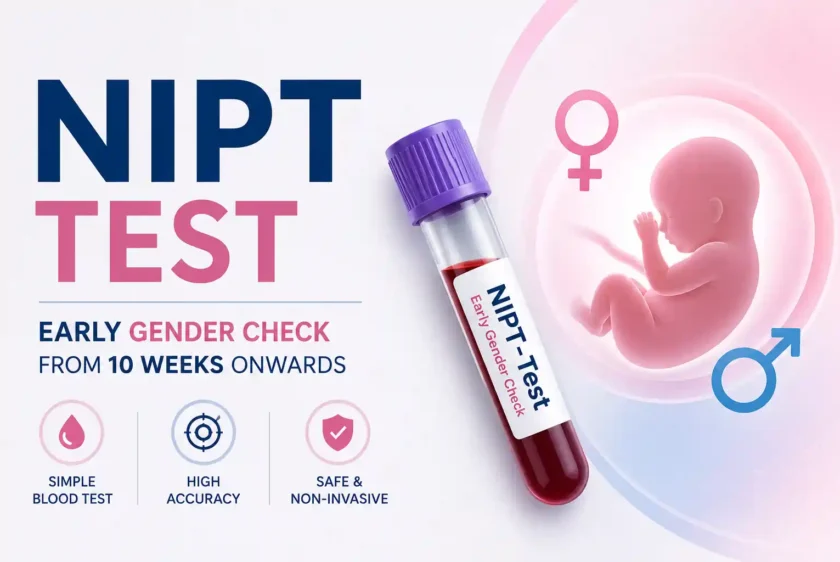
Expecting a baby is an exciting journey, but it can also bring many questions about your baby’s health and development. One of the most advanced prenatal screening options available today is the Non-Invasive Prenatal Test (NIPT).
At Nayab Labs & Diagnostic Centre, we understand the importance of early and reliable prenatal screening. NIPT is a safe and highly accurate screening test that helps assess the risk of certain genetic conditions in a developing baby through a simple blood sample.
In this guide, our experts answer the 10 most common questions about the NIPT Test, including how it works, when it should be performed, its accuracy, benefits, and what the results mean for expecting parents.
What Is NIPT?
NIPT, or Non-Invasive Prenatal Testing, is a prenatal screening test that analyzes small fragments of fetal DNA found in the pregnant individual’s bloodstream. The test helps identify the likelihood of certain chromosomal conditions without posing a risk to the pregnancy.
Unlike invasive procedures, NIPT only requires a simple blood sample and can provide valuable information about the baby’s genetic health.
When Should NIPT Be Done During Pregnancy?
NIPT can typically be performed from the 10th week of pregnancy onwards.
Most healthcare providers recommend taking the test between 10 and 22 weeks of pregnancy. Early testing allows expecting parents and healthcare professionals more time to understand the results and discuss any necessary follow-up care.
Who Should Consider an NIPT Test?
NIPT may be considered by:
- Individuals aged 35 years or older during pregnancy
- Those with abnormal ultrasound findings
- Families with a history of certain genetic conditions
- Pregnancies identified as higher risk through other screening tests
- Expecting parents seeking additional reassurance about their baby’s health
Today, many healthcare providers offer NIPT as an option for all pregnancies, regardless of age or risk level.
What Conditions Can NIPT Detect?
NIPT primarily screens for common chromosomal abnormalities, including:
- Down Syndrome (Trisomy 21)
- Edwards Syndrome (Trisomy 18)
- Patau Syndrome (Trisomy 13)
- Certain sex chromosome abnormalities
Depending on the test panel and laboratory, some advanced NIPT options may also screen for selected microdeletions and other genetic conditions.
How Accurate Is NIPT?
NIPT is considered one of the most accurate prenatal screening tests currently available.
For Down syndrome, NIPT has a detection rate of more than 99%. However, it is important to remember that NIPT is a screening test rather than a diagnostic test. A high-risk result does not confirm that a condition is present and may require additional diagnostic testing.
Can NIPT Determine the Baby’s Gender?
Yes. NIPT can often identify the baby’s sex by detecting specific genetic material within the fetal DNA present in the blood sample.
The accuracy of gender determination is generally very high when sufficient fetal DNA is available for analysis. Availability of gender reporting may vary depending on local regulations and laboratory policies.
Is NIPT Safe for the Pregnancy?
Yes. NIPT is considered a safe screening option because it only requires a blood sample from the pregnant individual.
Unlike invasive procedures such as amniocentesis or chorionic villus sampling (CVS), NIPT does not involve entering the uterus and therefore does not increase the risk of miscarriage.
How Long Does It Take to Receive NIPT Results?
Most NIPT results are available within 7 to 14 working days.
The exact turnaround time depends on the laboratory, testing platform, and whether the sample is processed locally or internationally.
What Does a High-Risk NIPT Result Mean?
A high-risk result indicates an increased likelihood that the baby may have a specific chromosomal condition.
However, NIPT is not a diagnostic test. A high-risk result should be discussed with a healthcare professional, who may recommend further testing to confirm the findings.
What Is the Difference Between NIPT and Double Marker Screening?
Both NIPT and Double Marker Screening are prenatal screening tests, but they differ in accuracy and methodology.
Double Marker Screening combines blood test results with ultrasound measurements to estimate risk. NIPT directly analyzes fetal DNA, making it significantly more accurate and reducing the likelihood of false-positive results.
For many expecting parents, NIPT provides greater reassurance and more reliable screening information during pregnancy.
Frequently Asked Questions About NIPT
Is NIPT Mandatory During Pregnancy?
No. NIPT is an optional screening test. The decision to undergo testing should be made after discussing the benefits and limitations with a healthcare professional.
Can NIPT Replace Amniocentesis?
No. NIPT is a screening test, while amniocentesis is a diagnostic procedure used to confirm certain genetic conditions.
Can NIPT Be Wrong?
Although highly accurate, NIPT is not 100% accurate. False-positive and false-negative results can occur in rare cases.
What Happens After a Positive NIPT Result?
A positive or high-risk result is usually followed by genetic counseling and diagnostic testing to confirm the findings.
Is NIPT Worth Considering?
Many expecting parents choose NIPT because it offers highly accurate screening information early in pregnancy without increasing risk to the baby.
Key Takeaways
- NIPT is a non-invasive prenatal screening test performed from 10 weeks of pregnancy.
- The test screens for common chromosomal conditions, including Down syndrome.
- NIPT is highly accurate but is not a diagnostic test.
- The procedure only requires a blood sample and is considered safe.
- Results are typically available within one to two weeks.
- Additional testing may be recommended if a high-risk result is reported.
Where Can You Get an NIPT Test in Pakistan?
If you are considering an NIPT test during pregnancy, it is important to choose a reliable laboratory with experienced healthcare professionals and quality testing standards. At Nayab Labs & Diagnostic Centre, we offer NIPT testing services to help expecting parents access advanced prenatal genetic screening with accurate and timely results.
Our team is committed to providing professional guidance throughout the testing process, ensuring that patients receive the information they need to make informed decisions during pregnancy.
Conclusion
NIPT has transformed prenatal screening by providing a safe, reliable, and highly accurate method of assessing the risk of certain genetic conditions during pregnancy. Understanding how NIPT works, when it should be performed, and what the results mean can help expecting parents make informed healthcare decisions.
If you are considering NIPT, consult your healthcare provider to determine whether the test is suitable for your pregnancy and individual circumstances.