
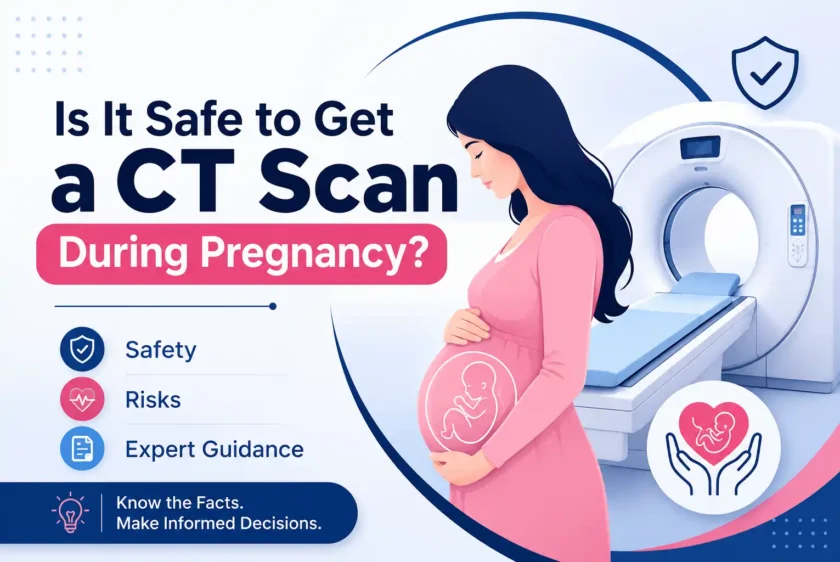
Pregnancy is a time when every medical decision deserves careful consideration. One of the most common questions expecting mothers ask is:
“Is it safe to get a CT scan during pregnancy?”
The short answer is CT scans are generally avoided during pregnancy unless they are medically necessary. However, if a CT scan is essential for diagnosing a serious illness or injury, the benefits of obtaining an accurate diagnosis often outweigh the potential risks.
This guide explains when a CT scan may be recommended during pregnancy, the associated risks, safer alternatives, and what medical experts advise.
Can pregnant-women undergo a CT scan?
Yes, but only when the examination is medically necessary and cannot be safely delayed or replaced by another imaging test such as ultrasound or MRI.
Doctors carefully evaluate:
- The stage of pregnancy
- The body part being scanned
- The urgency of the medical condition
- Available alternative imaging methods
What Is a CT Scan?
A Computed Tomography (CT) scan is an advanced imaging technique that combines multiple X-ray images with computer processing to create detailed cross-sectional images of the body’s internal structures.
CT scans are commonly used to diagnose:
- Head injuries
- Stroke
- Internal bleeding
- Lung diseases
- Kidney stones
- Severe abdominal pain
- Bone fractures
- Certain cancers
Is CT Scan Radiation Harmful During Pregnancy?
One concern surrounding CT scans is exposure to ionizing radiation.
Radiation has the potential to affect a developing fetus, especially during the early stages of pregnancy. However, the actual risk depends on several factors, including:
- Radiation dose
- Gestational age
- Body area being scanned
Importantly:
- CT scans of the head, neck, chest, or limbs expose the baby to little or no direct radiation because the uterus is outside the scanned area.
- CT scans of the abdomen or pelvis expose the fetus to more radiation and are performed only when absolutely necessary.
Modern CT scanners use advanced technology to keep radiation exposure as low as reasonably achievable (ALARA Principle).
When Might a Pregnant Woman Need a CT Scan?
Doctors may recommend a CT scan if delaying diagnosis could put the mother or baby at greater risk.
Examples include:
- Serious road traffic accidents
- Internal bleeding
- Suspected pulmonary embolism (blood clot in the lungs)
- Stroke
- Severe head injury
- Life-threatening infections
- Emergency abdominal conditions
In these situations, rapid and accurate diagnosis can be lifesaving.
Are There Safer Alternative?
Whenever possible, healthcare providers prefer imaging methods that do not use ionizing radiation.
Ultrasound
Usually the first imaging choice during pregnancy.
Common uses include:
- Baby assessment
- Gallbladder problems
- Kidney evaluation
- Pelvic examinations
What Should You Tell Your Doctor Before a CT Scan?
Always inform your healthcare provider if:
- You are pregnant
- You think you may be pregnant
- You are trying to conceive
- You are breastfeeding
- You have previous allergies to contrast dye
- You have kidney disease
This information helps the medical team choose the safest imaging option.
FAQs
Can I have a CT scan in the first trimester?
Doctors generally avoid CT scans during the first trimester unless the examination is medically necessary because this is an important stage of fetal development.
Is a chest CT scan safe during pregnancy?
A chest CT exposes the fetus to very little radiation because the uterus is outside the imaging area. Your doctor will still determine whether it is necessary.
Can CT scan radiation harm my baby?
Diagnostic CT scans typically use radiation doses that are much lower than levels associated with fetal harm. The exact risk depends on the type of scan and the area being examined.
Should I refuse a CT scan if I’m pregnant?
No. If your doctor recommends a CT scan because of a serious medical condition, delaying diagnosis may be more dangerous than the scan itself.
Key Takeaways
- CT scans are not routinely performed during pregnancy.
- They may be recommended when the mother’s health requires immediate diagnosis.
- Ultrasound usually preferred when appropriate.
- Modern CT scanners minimize radiation exposure.
- Always tell your healthcare provider if you are pregnant before any imaging examination.
- Medical decisions should always be made after consultation with your doctor and radiologist.
Conclusion
A CT scan is only recommended when the medical benefits clearly outweigh the potential risks. Advances in imaging technology have significantly reduced radiation exposure, and healthcare professionals carefully choose the safest diagnostic method for both mother and baby.
If your physician recommends a CT scan during pregnancy, discuss why it is needed, whether alternative imaging options are available, and what precautions will be taken. Making an informed decision with your healthcare team is the best way to protect both maternal and fetal health.