Getting a blood test is an important step in diagnosing, monitoring, and preventing many health conditions. However, not every blood test requires fasting. Knowing which blood tests require fasting helps ensure your results are accurate and reduces the chance of having to repeat the test.
In this guide, you’ll learn:
- Which blood tests require fasting
- Which tests don’t require fasting
- How long you should fast
- Whether you can drink water
- Common mistakes to avoid
- Frequently asked questions
Quick Answer:
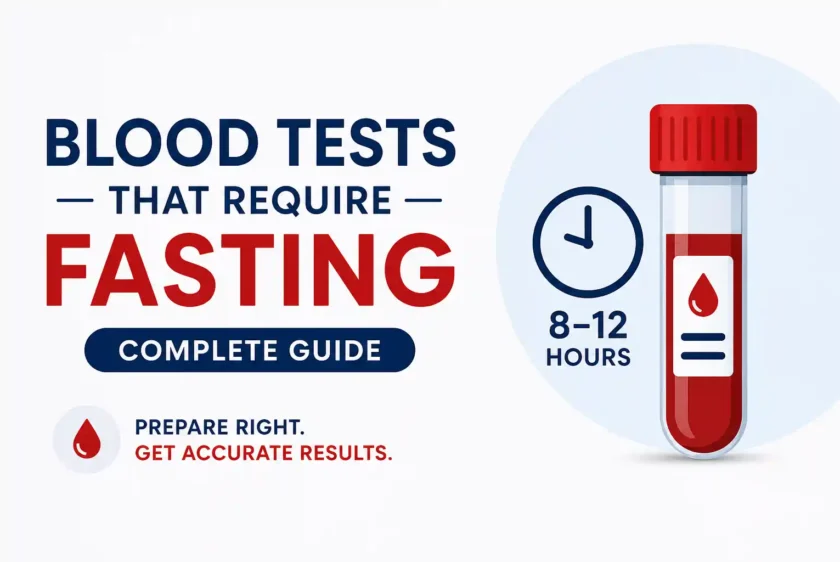
Most routine blood tests do not require fasting. However, tests such as Fasting Blood Sugar (FBS), Lipid Profile, Glucose Tolerance Test (GTT), and certain metabolic tests typically require fasting for accurate results.
Why Is Fasting Required Before Some Blood Tests?
When you eat or drink (except water), nutrients such as sugar, fats, proteins, and vitamins enter your bloodstream. These temporary changes can affect laboratory measurements.
Fasting allows your healthcare provider to evaluate your body’s natural baseline levels without the influence of a recent meal.
Benefits of fasting include:
- More accurate test results
- Better diagnosis
- Reduced need for repeat testing
- Reliable comparison with previous reports
Blood Tests That Require Fasting
The following table summarizes the most common fasting blood tests.
| Blood Test | Fasting Required | Recommended Fasting Time |
|---|---|---|
| Fasting Blood Sugar (FBS) | Yes | 8–12 hours |
| Lipid Profile | Usually Yes | 9–12 hours |
| Triglycerides | Yes | 9–12 hours |
| Glucose Tolerance Test (GTT/OGTT) | Yes | 8–12 hours |
| Insulin Level | Yes | 8–12 hours |
| Iron Studies (sometimes) | As advised | Usually morning fasting |
| Basic Metabolic Panel (selected cases) | Sometimes | Follow doctor’s advice |
1. Fasting Blood Sugar (FBS)
This test measures your blood glucose after fasting and is commonly used to:
- Diagnose diabetes
- Detect prediabetes
- Monitor diabetes treatment
Required fasting: 8–12 hours
During fasting:
- Drink plain water only.
- Avoid tea, coffee, juice, chewing gum, and smoking if instructed.
2. Lipid Profile
A lipid profile measures:
- Total cholesterol
- LDL (bad cholesterol)
- HDL (good cholesterol)
- Triglycerides
Although some guidelines allow non-fasting lipid testing in certain situations, many healthcare providers still recommend fasting—especially when triglyceride levels are being evaluated.
Recommended fasting: 9–12 hours
3. Triglyceride Test
Triglyceride levels can increase significantly after eating.
For the most reliable results, fasting is generally recommended.
4. Glucose Tolerance Test (GTT)
This test evaluates how your body processes glucose over time and is commonly used to:
- Diagnose diabetes
- Diagnose gestational diabetes during pregnancy
Patients should fast before the first blood sample is collected.
5. Insulin Level Test
An insulin test helps evaluate insulin production and insulin resistance.
Fasting improves the accuracy of this test by eliminating the effects of recent food intake.
Blood Tests That Usually Do Not Require Fasting
Many routine blood tests can be performed without fasting.
| Blood Test | Fasting Needed? |
|---|---|
| Complete Blood Count (CBC) | No |
| HbA1c | No |
| Thyroid Function Tests (TSH, T3, T4) | Usually No |
| Vitamin D | Usually No |
| Vitamin B12 | Usually No |
| Liver Function Tests (LFT) | Usually No |
| Kidney Function Tests (KFT) | Usually No |
| PT/INR | No |
| D-Dimer | No |
| CRP | No |
| ESR | No |
| PSA | Usually No |
Important: Always follow your doctor’s instructions, as some tests may require special preparation based on your medical condition.
How Long Should You Fast Before a Blood Test?
The required fasting period depends on the test.
| Test | Recommended Fasting |
|---|---|
| FBS | 8–12 hours |
| Lipid Profile | 9–12 hours |
| Triglycerides | 9–12 hours |
| GTT | 8–12 hours |
| Insulin Test | 8–12 hours |
Most patients schedule fasting blood tests early in the morning after an overnight fast.
Can You Drink Water While Fasting?
Yes.
Plain water is generally allowed and encouraged before most fasting blood tests.
Drinking water helps:
- Prevent dehydration
- Make blood collection easier
- Improve patient comfort
Avoid:
- Tea
- Coffee
- Milk
- Juice
- Soft drinks
- Energy drinks
- Alcohol
What Happens If You Accidentally Eat Before Your Blood Test?
If you eat or drink something other than water before a fasting blood test:
- Blood sugar levels may rise.
- Triglyceride levels may increase.
- Results may become inaccurate.
- Your healthcare provider may ask you to repeat the test.
If this happens, inform the laboratory staff before your sample is collected.
Tips for Preparing for a Fasting Blood Test
- Fast for the recommended number of hours.
- Drink plain water unless instructed otherwise.
- Take medications only if approved by your healthcare provider.
- Avoid alcohol before the test.
- Avoid heavy exercise immediately before testing.
- Arrive on time for your appointment.
Common Mistakes to Avoid
- Drinking coffee during fasting
- Chewing gum
- Smoking before the test (if advised against)
- Eating “just a small snack”
- Forgetting to inform the laboratory if fasting was broken
FAQs
Does CBC require fasting?
No. A Complete Blood Count (CBC) does not usually require fasting.
Does HbA1c require fasting?
No. HbA1c reflects your average blood sugar over the previous two to three months and does not require fasting.
Does a Lipid Profile require fasting?
Many healthcare providers recommend fasting for 9–12 hours, particularly when triglycerides are being measured.
Can I brush my teeth before a fasting blood test?
Yes. Brushing your teeth is generally acceptable. Avoid swallowing toothpaste or mouthwash.
Can I take my medicines before a fasting blood test?
Some medications can affect test results. Follow your doctor’s advice or ask the laboratory before your appointment.
Is black coffee allowed while fasting?
No. For most fasting blood tests, only plain water is recommended unless your healthcare provider instructs otherwise.
Key Takeaways
- Not all blood tests require fasting.
- Fasting is commonly required for Fasting Blood Sugar, Lipid Profile, Triglycerides, Glucose Tolerance Test, and Insulin Level tests.
- Plain water is usually allowed during fasting.
- Eating before a fasting test may affect the accuracy of your results.
- Always follow your healthcare provider’s or laboratory’s instructions for test preparation.
Book Your Blood Test with Nayab Labs & Diagnostic Centre
Whether you need a routine health check, diabetes screening, cholesterol testing, or specialized laboratory investigations, Nayab Labs & Diagnostic Centre is committed to providing accurate results, experienced professionals, and quality patient care.
If you’re unsure whether your test requires fasting, our team can guide you before your appointment to help ensure the most accurate results.